
Launch a lab
A 90-day plan for your first VR lab.
This is the plan Deborah presents to radiography educators at professional meetings. She’ll walk your team through it on a call and help with each step, from the first stakeholder meeting to the day your students put on a headset.
The plan
Five steps, roughly in this order.
Bring the right people in early
Faculty, students, IT, administration, and your clinical affiliates. IT matters more than most programs expect, because headsets need network access and someone to manage them.
Find the money
Sources worth checking include Perkins V career and technical education funds, USDA Distance Learning and Telemedicine grants for rural programs, institutional budget lines, a student lab fee priced against the cost of a textbook, and gifts from alumni and local businesses. Deborah can help write the budget request.
Do your vendor due diligence
Ask where the company is based, whether they have clinicians and educators on staff, what upgrades cost, and what is coming next. This step can move quickly.
Plan the space
Simulation adds to your energized lab rather than replacing it, so plan it as extra stations. Decide whether you need a dedicated room, how much clear floor space each student needs, whether stations need dividers, and where headsets will charge and be cleaned. A screen to cast to lets the class watch.
Start with a phase, then scale
Many programs begin with one cohort and a few headsets, then add licenses, laptops, and room as faculty build simulation into the curriculum. Institutions run anywhere from one headset per 15 students to one per 30.
Space
You may not need a new room.
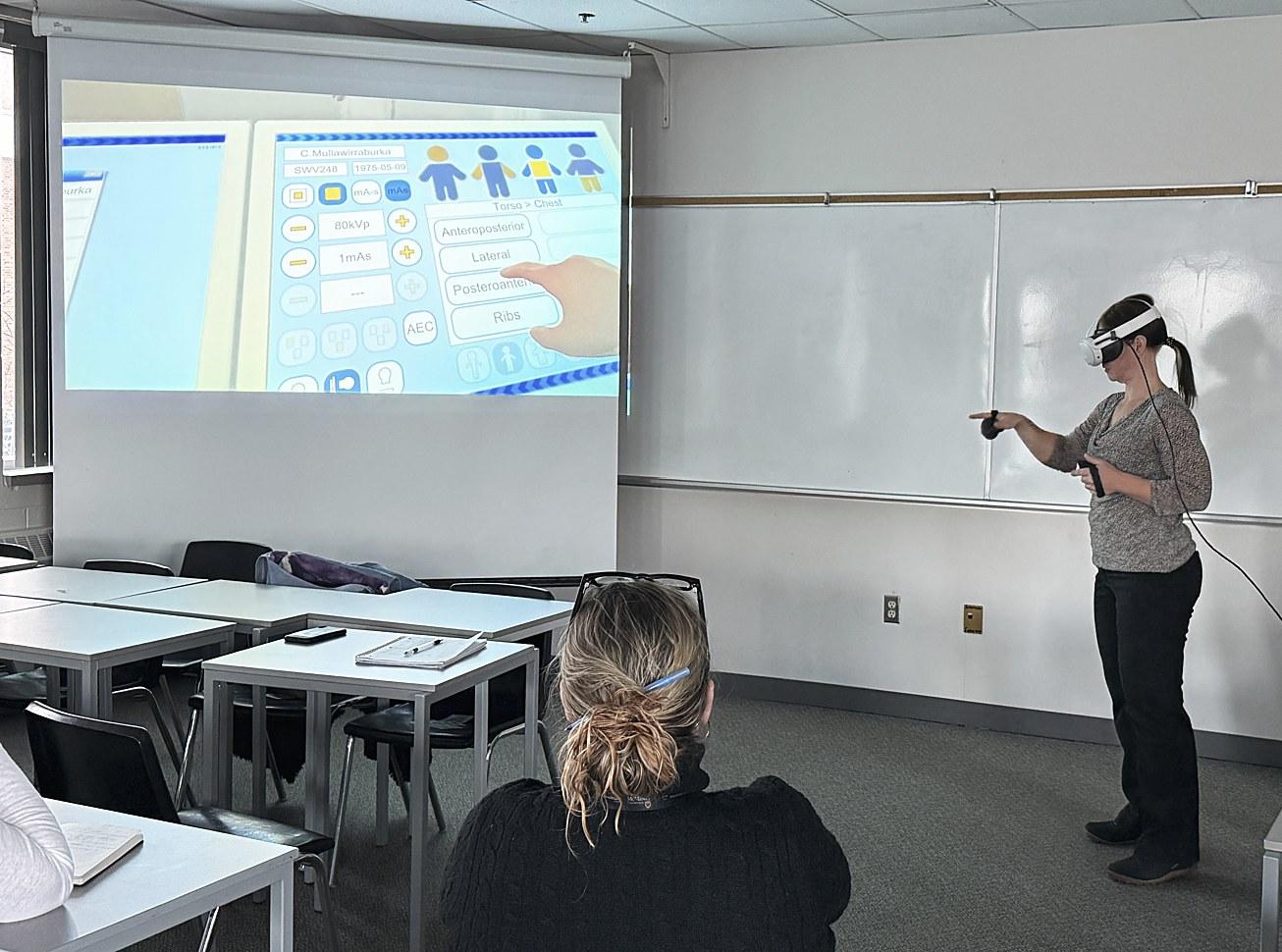
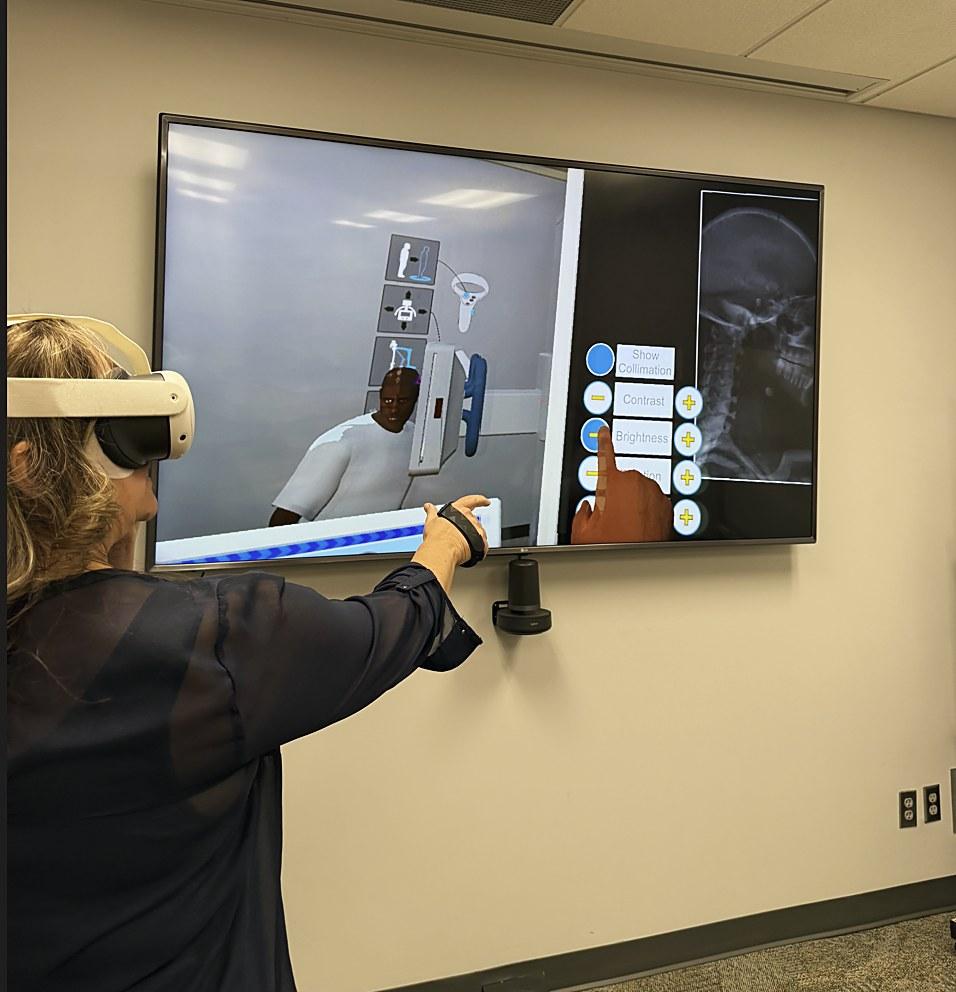
Many programs run X-ray Pro VR in an ordinary classroom, with one student in the headset and the class following on a projector or wall screen. Deborah will help you decide how many stations you need, how much clear floor space each one takes, and where headsets charge and get cleaned between students.
Funding
Where the money usually comes from.
Most programs combine two or three of these. Deborah can help you write the request.
- Perkins V
- Career and technical education funds. What they can buy depends on your state’s plan, so check with your Perkins coordinator early.
- USDA Distance Learning and Telemedicine grants
- For programs serving rural communities. Applications run on a yearly cycle, so this one needs lead time.
- Institutional budget
- A line in the department or college budget. Deborah can help you make the case.
- Student lab fee
- A per-student fee, compared against what students already spend on books.
- Donors
- Alumni, the community, and local businesses and employers that hire your graduates.
Walk through the plan with Deborah.
Bring your program director, a faculty lead, and someone from IT. Deborah will go through what you need, what it costs, and how other programs have paid for it.
Deborah answers every message herself. Or email deborah@xrt-solutions.com